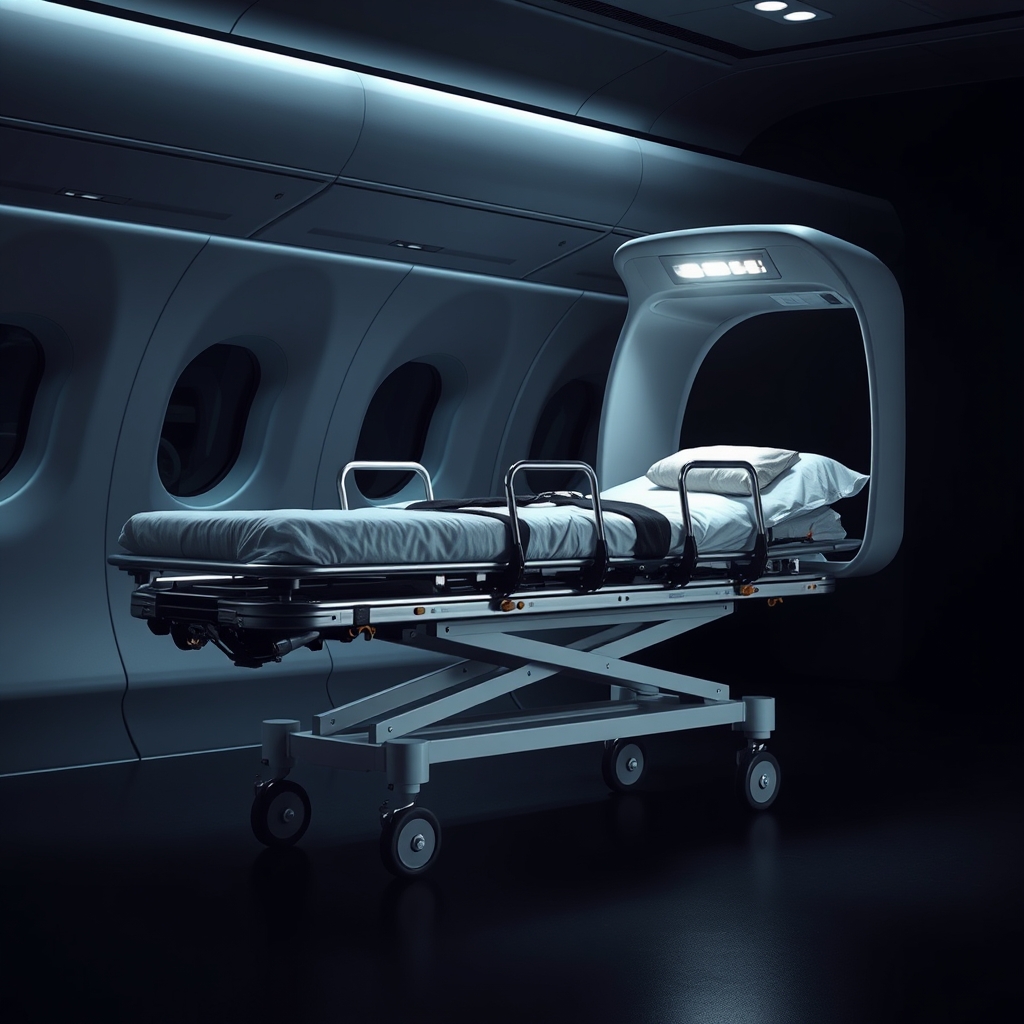
The Essential Guide to Commercial Airline Stretcher Services for Safe Medical Transport
Learn more about commercial airline stretcher and how it applies to your specific needs.
When a patient requires medical transport across long distances, the offers a practical and cost-effective solution. Unlike private air ambulances, commercial flights with stretcher accommodations allow patients to travel while lying flat, accompanied by medical professionals. This service bridges the gap between standard commercial travel and dedicated medical evacuation, making it accessible for those with stable but non-ambulatory conditions. In this guide, we explore how this service works, who benefits, and what to consider when arranging such transport.
What Is a Commercial Airline Stretcher?
Learn more about airline stretcher Canada and how it applies to your specific needs.
A commercial airline stretcher is a specially designed bed that is installed on a regular passenger aircraft, typically in a dedicated section of the cabin. It allows a patient to remain supine throughout the flight, which is essential for individuals with spinal injuries, severe mobility issues, or post-surgical recovery. The stretcher is secured to the aircraft’s seat tracks, and the surrounding seats are removed or blocked off to create space. Medical attendants accompany the patient to monitor vital signs and provide care. This service is available on many major airlines, but it requires advance booking and medical clearance. For residents of Canada, options like are increasingly common, offering a reliable way to move patients between provinces or internationally.
How Does the Booking Process Work?
Arranging a commercial airline stretcher involves several steps. First, a physician must certify that the patient is fit to fly under these conditions. Then, the airline’s medical desk reviews the case and approves the stretcher installation. Typically, the patient needs to purchase multiple seats—usually six to nine—to accommodate the stretcher and medical team. The cost varies by airline and route, but it is often significantly lower than an air ambulance. For those in western Canada, services are well-established, with Calgary and Edmonton airports frequently handling such requests. It is advisable to book at least 48 to 72 hours in advance, though emergencies may be expedited.
Medical Considerations and Patient Eligibility
Not every patient qualifies for a commercial airline stretcher. The patient must be medically stable, meaning no risk of in-flight deterioration that would require intensive care. Conditions like recent heart attacks, uncontrolled seizures, or active infections may disqualify the patient. The stretcher patient transport team typically includes a nurse or paramedic who brings necessary medical equipment, such as oxygen tanks, suction devices, and monitoring gear. The airline imposes strict weight and size limits for the stretcher and accompanying gear. For example, the stretcher itself must fit within the cabin dimensions, and the patient’s weight must not exceed the structural limits of the installation. These details are coordinated with the airline’s medical team and the provider to ensure safety.
Comparing Costs: Commercial Stretcher vs. Air Ambulance
Learn more about commercial airline stretcher alberta and how it applies to your specific needs.
One of the primary reasons families choose a commercial airline stretcher is cost. While an air ambulance can cost tens of thousands of dollars, a commercial stretcher setup may range from $5,000 to $15,000 depending on the route and number of seats purchased. However, this does not include the cost of medical escorts, which may be billed separately. In regions like Alberta, services are available but can be prohibitively expensive for non-emergency transfers. The commercial option provides a middle ground, offering professional medical care without the premium price tag of a dedicated jet. Insurance coverage varies; some policies reimburse part of the cost if deemed medically necessary.
Preparing for the Flight: Logistics and Comfort
Learn more about stretcher patient transport and how it applies to your specific needs.
On the day of travel, the patient is transported to the airport via medical ground transport and boarded before other passengers. The stretcher is set up, and the patient is transferred from the gurney to the airline stretcher. Comfort measures include padding, blankets, and pillows, but the patient should bring any personal items that aid relaxation, such as earplugs or an eye mask. The medical team remains nearby throughout the flight, and the cabin crew is briefed on the situation. For longer flights, the patient may be offered light meals or hydration through a straw. It is important to note that lavatory access is not possible while on the stretcher, so adult diapers or catheters may be used. After landing, the patient is offloaded first and transferred to waiting ground transport.
Legal and Safety Regulations
Commercial airlines operate under strict regulations from aviation authorities like the FAA and Transport Canada. Stretcher installations must comply with safety standards, including secure tie-downs and emergency exit accessibility. The medical team carries documentation proving their qualifications and the patient’s fitness to fly. In some cases, the airline may require a liability waiver. For those seeking services, it is essential to work with a reputable medical transport coordinator who understands these regulations. They ensure that all paperwork is in order and that the flight proceeds without delays.
Choosing the Right Medical Transport Provider
Not all medical transport companies offer commercial airline stretcher services. When selecting a provider, look for experience with specific airlines, knowledge of international routes, and a network of qualified medical escorts. Companies like Jet Companion specialize in coordinating these complex logistics, from medical clearance to ground transfer. They also offer assistance with insurance claims and can arrange for bookings efficiently. A good provider will also handle contingencies, such as flight cancellations or medical emergencies during the journey.
FAQs
Can I book a commercial airline stretcher for an international flight?
Learn more about air ambulance alberta and how it applies to your specific needs.
Yes, many major airlines offer stretcher services on international routes, but availability varies. You must contact the airline’s medical desk well in advance and provide medical documentation. Some countries have additional entry requirements for medical patients.
What medical equipment is allowed on board?
Standard equipment includes portable oxygen concentrators, suction machines, and cardiac monitors. However, the airline must approve all equipment in advance. Lithium batteries for devices must comply with aviation safety rules.
How many medical escorts are required?
Typically, one or two medical professionals accompany the patient. The exact number depends on the patient’s condition and airline policy. The escorts must have valid certifications and may need to provide proof of training.
Is insurance likely to cover commercial airline stretcher costs?
Some health insurance plans and travel insurance policies cover part of the cost if the transport is medically necessary. You should check with your provider and obtain pre-authorization. Keep all receipts and medical reports for claims.