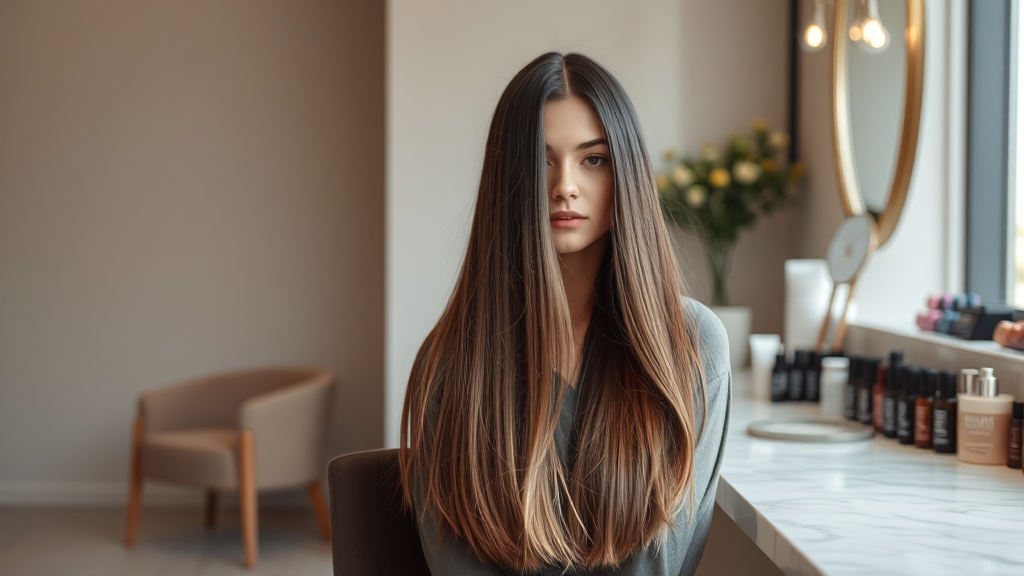
1C Hair Type: The Straight, Slightly Textured Hair Guide for Real Life
Most people assume straight hair is one simple category. In reality, type 1 hair has three distinct textures, and the 1c hair type sits at the very edge of that family. It is straight, yes, but it is not sleek, glassy, or completely flat against the head. If your hair dries mostly straight yet keeps a soft bend, a bit of body, and a mind of its own at the ends, you may have been treating it like 1a or 1b hair for years without realising it.
Understanding your true texture changes everything: how you wash, how you cut, how you style, and how much heat you actually need. This guide breaks down what 1c hair really is, how to tell it apart from neighbouring types, and how to build a routine that works with your natural pattern instead of fighting it every morning.
What Is the 1C Hair Type?
The Andre Walker hair typing system divides hair into four main groups: type 1 (straight), type 2 (wavy), type 3 (curly), and type 4 (coily). Each group is then split into subcategories a, b, and c, moving from the finest, flattest texture to the thickest and most textured version.
Within type 1, the progression looks like this:
- 1a: Completely straight, fine, and flat with almost no natural bend. It shines easily but struggles to hold volume.
- 1b: Straight with slightly more body than 1a. It can hold a light curl or wave for a while but still reads as straight.
- 1c: Straight with visible thickness, natural body, and a subtle wave or flick, especially near the ends. It is the most textured and often the coarsest of the straight types.
So 1c hair is not curly. It is not wavy in the classic sense either. It is straight hair with personality, body, and a tendency to bend rather than lie perfectly flat. Many people with 1c hair describe it as “straight but not straight” or “straight with a slight kink.”
How to Tell If You Have 1C Hair
Hair typing is easiest when your hair is freshly washed, air-dried, and completely product-free. Once you have that clean baseline, look for these signs:
- Your hair dries mostly straight but never truly sleek.
- There is a noticeable bend, wave, or flick at the ends rather than a clean straight line.
- Your hair has natural volume at the roots and mid-lengths, not just at the crown.
- Individual strands feel thicker or coarser than fine 1a hair.
- It holds a curl or bend reasonably well without heavy styling products.
- Humidity can make it look slightly frizzy or puffy rather than sleek.
- Brushing it smooth takes effort, and it often reverts to its natural shape within hours.
If several of these sound familiar, 1c is a strong possibility. If you are still unsure, an online hair type quiz can be a helpful starting point, since it walks you through the same visual checks in a structured way.
1C Hair vs 1B and 2A: Where the Lines Blur
The trickiest part of hair typing is the grey area between 1c and its neighbours. Here is how to separate them:
1C vs 1B
1b hair is straight with a little bounce, but it still falls into a clean, straight shape. 1c hair has more thickness, more body, and a visible bend or flick that does not disappear after brushing. If your hair looks straight in photos but has a life of its own in person, you are probably closer to 1c.
1C vs 2A
2a hair forms loose, defined waves, usually in an S-shape pattern. 1c hair does not form true waves; it forms a subtle bend or a soft flick at the ends. The difference is mainly in definition: 2a waves are visible and repeatable, while 1c bends are softer and less uniform.
It is also worth remembering that hair type is not a fixed identity. Hormones, age, heat damage, and even the water in your area can shift how your hair behaves. Many people move slightly along the spectrum over the years.
Why 1C Hair Behaves the Way It Does
The behaviour of 1c hair comes down to two main factors: the shape of the hair follicle and the thickness of the individual strand.
Straight hair grows from a round or slightly oval follicle. In 1c hair, the follicle tends to be a little more oval than in 1a or 1b, which introduces a gentle natural bend. At the same time, the strands themselves are often medium to coarse in diameter, giving the hair more weight, strength, and body.
That combination explains the classic 1c experience: the hair has enough weight to fall straight, but enough texture to resist being perfectly flat. It also explains why 1c hair can look thick and full one day and slightly puffy the next, depending on humidity and how it was dried.
How to Care for 1C Hair
Because 1c hair is straight but textured, it needs a routine that balances smoothness with body. Too much heavy product and it goes flat; too little and it turns frizzy. Here is a practical approach.
Washing and Conditioning
Wash your hair two to three times a week unless your scalp needs more frequent cleansing. Use a gentle shampoo that cleans without stripping, and follow with a lightweight conditioner focused on the mid-lengths and ends. If your hair is coarse, a slightly richer conditioner can help, but keep it away from the roots to avoid weighing down your natural volume.
Drying Technique
How you dry your hair matters more than most people realise. Gently squeeze excess water with a soft towel or cotton t-shirt rather than rubbing vigorously. If you want a smoother finish, blow-dry on medium heat with the nozzle pointing down the hair shaft. If you prefer natural texture, let it air-dry and resist the urge to brush it repeatedly, which can cause frizz.
Heat Styling
1c hair straightens easily, which is both a blessing and a risk. Because it already has some texture, it can look sleek with minimal heat. Always use a heat protectant, keep your iron or dryer on a moderate setting, and avoid daily high-heat styling. Over time, excessive heat can strip the natural bend and leave the hair looking limp and damaged.
Products That Work Well
- Lightweight leave-in conditioners for smoothness without weight.
- Volumising mousses or root lifts for added body.
- Anti-humidity serums for frizz-prone days.
- Sea salt or texturising sprays to enhance the natural bend.
- Dry shampoo to refresh roots between washes.
Styling Ideas for 1C Hair
One of the best things about 1c hair is its versatility. It can be worn sleek, tousled, or somewhere in between. Here are a few styles that suit this texture particularly well:
- Soft blowout: A round-brush blowout gives 1c hair a polished, bouncy finish that lasts for days.
- Loose bends: Use a large barrel iron or a curling wand on low heat to create soft, natural-looking bends rather than tight curls.
- Textured ponytail: A mid-height ponytail with slightly undone ends highlights the natural body of 1c hair.
- Half-up styles: Pulling back the top section adds volume while letting the natural texture show at the ends.
- Beach waves: A salt spray plus a little scrunching brings out the subtle wave in 1c hair without making it look styled.
If you are unsure which styles flatter your face shape as well as your hair type, tools like a face shape detector can help you choose cuts and partings that work in your favour.
Common Mistakes People With 1C Hair Make
Many 1c hair struggles come from treating it like a different texture. Watch out for these habits:
- Using heavy oils and butters: These are designed for curly and coily hair and can leave 1c hair greasy and flat.
- Over-brushing: Constant brushing disrupts the natural bend and encourages frizz.
- Skipping heat protection: Straight hair still needs protection, especially if you style it often.
- Choosing the wrong cut: Blunt cuts can make 1c hair look heavy, while too many short layers can make it puffy. Soft, long layers usually work best.
- Fighting the texture: Trying to force 1c hair into either perfectly sleek or fully wavy styles rarely works. Working with its natural body gives better, longer-lasting results.
Hair Type, Colour, and Your Overall Look
Hair type is only one piece of the puzzle. The colours you wear, the tones in your skin, and the overall contrast of your features all influence how your hair reads. For example, someone with 1c hair and a cool, high-contrast colouring may look striking with a sharp, sleek style, while someone with softer, warmer colouring may suit a more tousled, natural finish.
This is where personal colour analysis becomes useful. Knowing whether you lean warm, cool, or neutral helps you choose hair colours, highlights, and even styling choices that harmonise with your natural features rather than clashing with them.
Frequently Asked Questions About 1C Hair
Is 1c hair rare?
It is less common than 1a and 1b, but not extremely rare. Many people with straight hair actually have 1c and simply assume they have 1b. It becomes more noticeable when hair is left to air-dry without styling products.
Can 1c hair become wavy?
Natural hair type is largely determined by genetics, so 1c hair will not permanently become wavy. However, hormonal changes, pregnancy, medication, and ageing can sometimes shift the pattern slightly. Heat and chemical treatments can also temporarily alter how the hair behaves.
What is the best haircut for 1c hair?
Soft, long layers usually work best because they add movement without creating puffiness. Blunt cuts can look heavy, while very short layers can make the hair look wider than it is. A stylist who understands straight-textured hair can tailor the cut to your face shape and density.
How often should I wash 1c hair?
Two to three times a week suits most people with 1c hair. If your scalp is oily, you may need to wash more often, while drier or coarser 1c hair may do well with less frequent washing and a good dry shampoo between sessions.
Does 1c hair hold curls well?
Yes, better than 1a or 1b hair. The natural body and slightly coarser texture help curls and bends last longer. Using a light styling product and allowing the hair to cool completely before touching it will help the style hold.
What products should I avoid with 1c hair?
Avoid heavy butters, thick creams, and excessive oil-based products, as these can weigh the hair down and make it look greasy. Stick to lightweight formulas designed for straight or fine-to-medium hair.
Final Thoughts
The 1c hair type is often misunderstood because it sits between straight and wavy. It is straight enough to look sleek when styled, yet textured enough to have natural body and movement. Once you understand its quirks, caring for it becomes far simpler. Focus on lightweight products, gentle drying, moderate heat, and cuts that work with your natural shape rather than against it.
If you are still figuring out your exact texture, take the time to observe your hair in its natural, product-free state. And if you want a more structured starting point, exploring your hair type alongside your personal colour profile can give you a much clearer picture of what truly suits you.



More Stories
두피관리, 염색과 헤드스파를 함께 생각하는 2025년 현명한 관리법